Food loss and waste refers to food that can still be eaten but is thrown away. It is said that 1 billion tons of food loss and waste are generated globally each year (Note 1). And while Japan has a low food self-sufficiency rate at around 38% and depends largely on imports for its food (Note 2), more than 4.64 million tons are thrown away each year (Note 3). On the other hand, the problem of hunger also continues to exist in the world. There are thought to be about 700 million people without access to adequate nutrition (Note 4).
In Japan, the Act on Promoting Food Loss and Waste Reduction (Food Loss and Waste Act) was promulgated in May 2019 (enacted in October 2019). We are making proactive efforts to contribute to the SDGs target of halving global food waste by 2030 mentioned in the above Act, as well as to seriously address our obligations as a business operator under the law.
(Note 1): UNEP (United Nations Environment Programme) "Food Waste Index Report 2024" (2024)
(Note 2): Ministry of Agriculture, Forestry and Fisheries, "FY2024 food supply and demand table (final report) (2025)
(Note 3): Ministry of Agriculture, Forestry and Fisheries, Ministry of the Environment, "FY2023 estimate"
(Note 4): FAO (Food and Agriculture Organization of the United Nations) "The State of Food Security and Nutrition in the World 2025" (2025)
The Food Loss and Waste Subcommittee is engaged in initiatives to reduce food loss and waste in the businesses across the Group companies in Japan and to raise the awareness of the employees.
![[Figure] Promotion Framework](/assets/img/site/140/140_236_img-01e.svg)
The targets specified in the long-term vision, “GOOD FOODS 2030,” and in the Medium-Term Management Plan, “GOOD FOODS Recipe2” are as follows. We set a target for reduction of waste from animal and plant residues (excluding inedible parts of fish, vegetable cores, outer leaves, and similar wastes arising in the production process) and products that can be reduced through self-supporting efforts. In addition, as some residues are hard to reduce and the need for recycling is growing, we will set a new recycling-rate target for these residues from FY2025 and continue to strengthen our efforts.
| Indicators | Scope | Results | KPI | |
|---|---|---|---|---|
| FY2025 | Target by 2027 Medium-Term Management Plan "GOOD FOODS Recipe2" |
Target by 2030 Long-Term Vision "GOOD FOODS 2030" |
||
| Waste from animal and plant residues (Base year: FY2017; per unit) |
Nissui Group in Japan | Reduced by 15.3% | Reduce by 25% | Reduce by 30% |
| Food recycling rate (resource circulation rate) | Nissui Group in Japan | 96.8% | 95% | 100% |
| Waste from products (Base year: FY2020; Absolute quantity) |
Nissui Corporation | Reduced by 26.0% | Reduce by 30% | Reduce by 50% |
The Nissui Group, as part of its corporate responsibility of a company handling food, is addressing food loss and waste. Mainly through the Food Loss and Waste Subcommittee, we are addressing this issue throughout the supply chain, including raising the awareness of its employees and activities involving the general public, as well as reducing loss in the stages of production, distribution, sales and consumption.

*(Note): Food bank: A group which brings together food products with no quality problems but are unsuitable for sale, and people who can’t obtain enough food.
To minimize waste of finite resources and reduce environmental impact, the most important thing is to prevent the occurrence of food loss and waste. Based on this philosophy, the Nissui Group is working to reduce food loss and waste from the production stage onward. At production sites, we promote improvement activities such as process reviews and production equipment adjustments. We are also working to reduce excess inventory and disposal risk through optimized production planning and thorough inventory management. For unavoidable food loss and waste generated in spite of these initiatives, we are working to improve resource recycling and the recycling rate through thorough waste separation and conversion into feed, fertilizer, and methane.
To prevent food loss and waste caused by logistics accidents and damage to outer packaging during product imports, we are working to improve the strength of outer cardboard packaging and devise better cargo loading methods. In addition, we provide loading guidance to on-site personnel and conduct training using video materials that summarize the causes of such incidents.
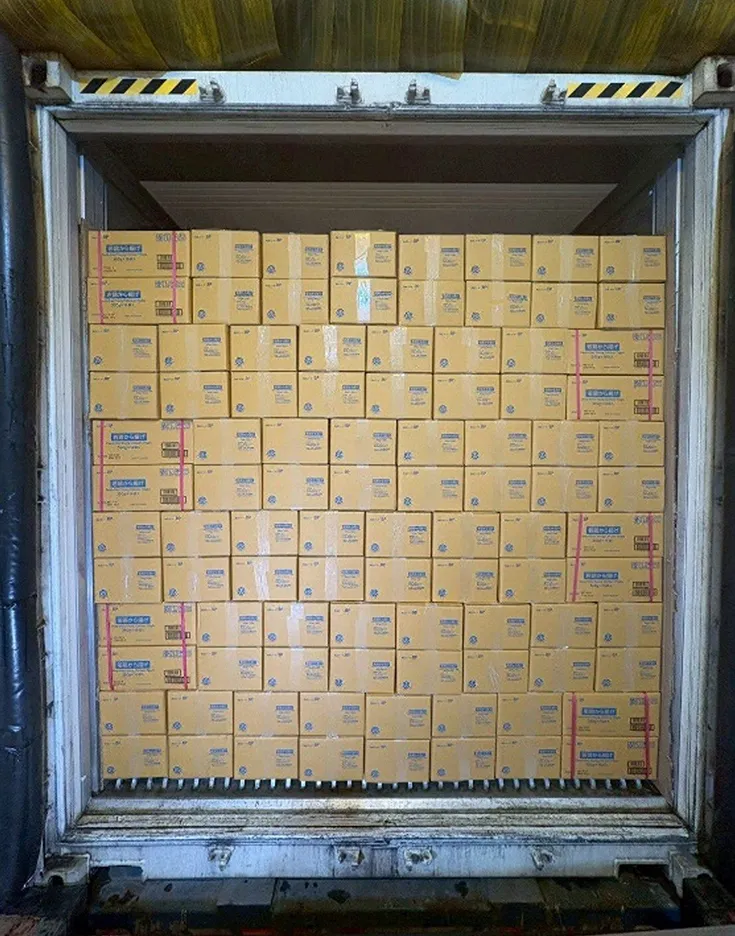
Stacking to Prevent Collapse
Nissui is working to change the labeling of best-before periods to year/month format and to extend best-before periods in an effort to reduce food loss and waste. For all canned products excluding private-brand items manufactured on and after July 1, 2019, we began labeling best-before periods in year/month format. In this process, we conducted storage tests to verify whether product quality could be maintained and confirmed that the best-before periods could be extended. The introduction of year/month labeling is expected to contribute not only to the reduction of food loss and waste but also to greater efficiency in logistics.
In addition, for various products such as fish sausage, surimi-based products, shelf-stable foods, and frozen foods, we are working to extend best-before periods after confirming through sensory evaluation and scientific analysis that there is no impact on quality. We will continue working to extend best-before periods going forward.
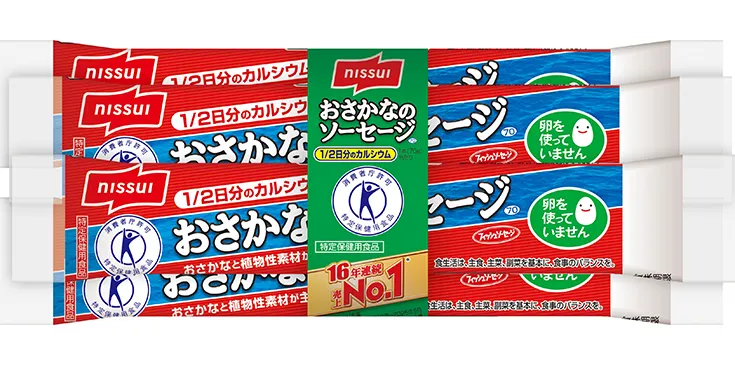
Osakana no sausage
Since FY2008, Nissui has been donating frozen food to Second Harvest Japan, an NPO that provides food to people in need. A food bank connects food products that are still safe and wholesome but no longer suitable for sale with people in need of food assistance. By providing food to welfare facilities such as children's homes and mother-and-child support centers, we strive to make effective use of food resources while also contributing to society. The main donation destination and actual donations for FY2025 are shown in the attached table.
Additionally, based on the “Food Donation Guidelines ” published by the Consumer Affairs Agency in December 2024, we have established internal “Guidelines for Food Donations” and “Agreements on Food Provision ” and are advancing initiatives toward expanding food donations and strengthening our systems.
| Donation destination | Donation details | Volume(kg) |
|---|---|---|
| Second Harvest Japan | Frozen food, Shelf-stable foods | 4,903 |
| Meals on Wheels Japan | Frozen food, Shelf-stable foods | 3,385 |
| Save the Children Japan | Shelf-stable foods | 804 |
In addition, in FY2025 as a new initiative Nissui participated in the Ministry of Agriculture, Forestry and Fisheries' emergency support program to establish a supply framework for food that would otherwise go unused, and donated food to Okinawa Prefecture. This program is implemented in collaboration with food manufacturers, logistics companies, welfare organizations, and other partners, with Meals on Wheels Japan playing a central role. Using sea freight, Nissui donated shelf-stable foods such as bottled and canned products along with frozen foods, a first for this initiative. These foods are provided to kodomo shokudo (children's cafeterias) and welfare organizations throughout Okinawa Prefecture, including remote islands. Going forward, Nissui will continue to promote the effective use of such food through public–private collaboration and partnerships with diverse stakeholders, while working to build systems that ensure reliable delivery even to regions that are difficult to reach.
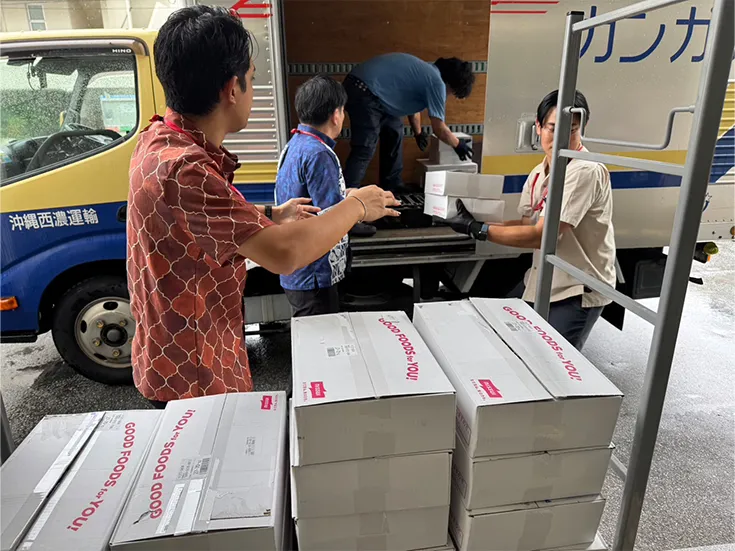
Relief Supplies Delivered to Okinawa Prefecture
Chilldy Co., Ltd., a Group company, is advancing upcycling initiatives to transform unused food such as bread crusts that are inevitably generated during bread processing into valuable resources. Specifically, bread crusts generated at our own factory are used as raw materials for external ethanol production, and the ethanol is incorporated into disinfectant alcohol that is used again for hygiene management within our own factory. Furthermore, we are also developing and selling rusk-style products that utilize bread crusts.
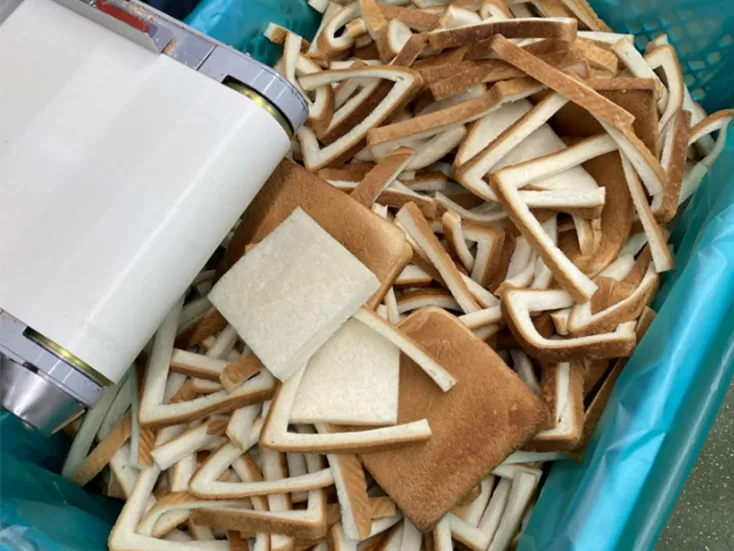
Bread Crusts Generated During Sandwich Processing
Bioethanol Conversion
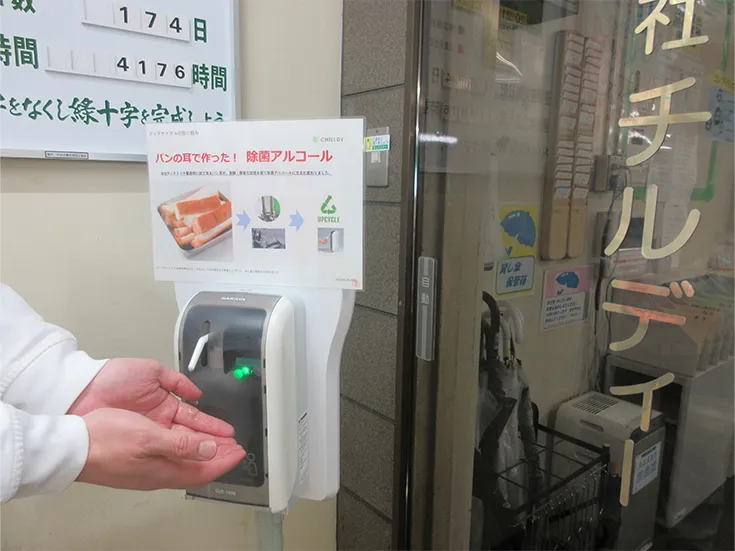
Utilized as Disinfectant Alcohol Within the Company
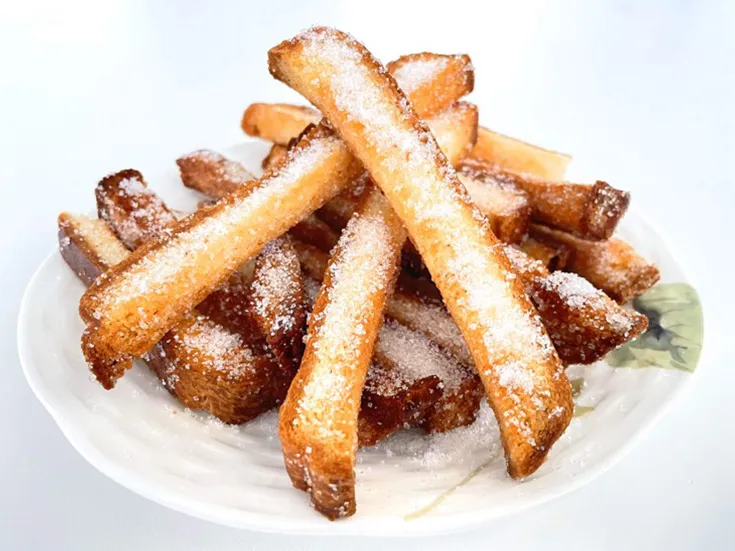
Rusk-Style Products Utilizing Bread Crusts
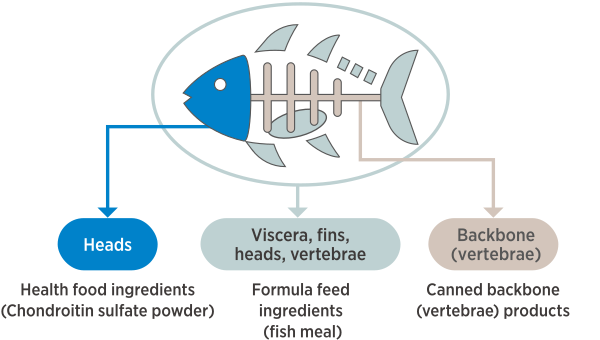
Group company Nissui Salmon Corporation is advancing initiatives to effectively utilize fish heads, internal organs, fins, backbone, and other byproducts generated during primary processing as resources without waste. Additionally, for small fish that are difficult to utilize, we are working on joint commercialization in collaboration with local fisheries high schools and companies.
For items that are difficult to effectively utilize, we are promoting recycling with feed conversion as the top priority in accordance with the Food Recycling Law.
As an employee awareness-raising initiative, we featured “Reduction of food loss and waste” in the FY2024 Sustainability Newsletter.
In FY2025, the training for Sustainability Promotion Members covered food loss and waste reduction to deepen their understanding of the issues and countermeasures.
Dissemination of Sustainability Activities Throughout Nissui
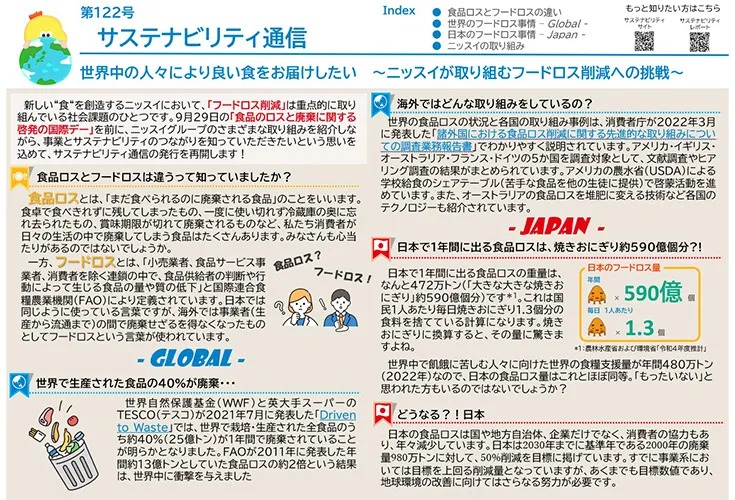
Sustainability Newsletter