The Nissui Group aims to preserve the bountiful sea and improve the sustainability of marine resources. One way in which we aim to do that is by acquiring ASC and MSC certification, and by using marine products that have marine eco-label certification.
Seafood certification programs such as MSC determine their criteria on the basis of the “Code of Conduct for Responsible Fisheries” and the “Guidelines for the Ecolabelling of Fish and Fishery Products from Marine Capture Fisheries” of the Food and Agriculture Organization of the United Nations (FAO). However, as understanding of sustainable seafood has expanded, the number of certification programs has also increased, making it necessary to assess their reliability. For this reason, the Global Sustainable Seafood Initiative (GSSI), was established as a international framework to verify whether certification programs meet the FAO guidelines.
Nissui, as a company committed to enhancing the sustainability of global marine resources, endorsed the GSSI initiative and became the first Japanese company to join as a funding partner in April 2017. Currently, six Nissui Group companies are participating as partners to support the promotion of international sustainability standards.
Participation in External Initiatives
![[Logo] GSSI](/assets/img/site/170/170_42_img-01.png)
MSC certification is an international certification scheme for sustainable fisheries for wild-caught seafood operated by the Marine Stewardship Council (MSC). Through the “MSC Fisheries Standard,” which applies to fisheries themselves, and the “MSC Chain of Custody (CoC) standard,” which ensures that certified products are kept separate and managed at each stage of distribution and processing, third-party organizations assess fisheries from three core principles: sustainable fish stocks, minimizing impacts, and effective fisheries management, thereby ensuring traceability from catch to product. The Nissui Group has obtained MSC certification for multiple fishing grounds and fish species, including Alaska pollock, and is promoting sustainable use of marine resources and responsible procurement.
MSC-C-51733
Merluccius australis (Chile Austral hake) bottom trawl and midwater trawl fishery/longline fishery operated in Chile Fishing Areas X, XI and XII by Empresa de Desarrollo Pesquero de Chile S.A. (EMDEPES) (Chile)—a Nissui Group company—and three other companies acquired MSC certification (Fisheries Certification Requirements (FCR) version 2.0) on September 24, 2019. In June 2020, EMDEPES acquired CoC certification (Note) for its vessel "UNIONSUR" as well as its logistics facilities. EMDEPES produces mainly H&G (Headed and gutted) and filleted Merluccius australis, etc. and sells them primarily to the Spanish market. Having acquired CoC certification, EMDEPES will be able to produce and sell them as MSC-certified products.
(Note) Chain of Custody (CoC) certification: This is a certification managed and operated by the Marine Stewardship Council (MSC) with respect to the management of processing and distribution processes (i.e., Chain of Custody). It certifies that its certified seafood has been managed appropriately, has not been contaminated with non-certified ingredients and is free from mislabeling throughout all processes of production, processing and distribution of the products.
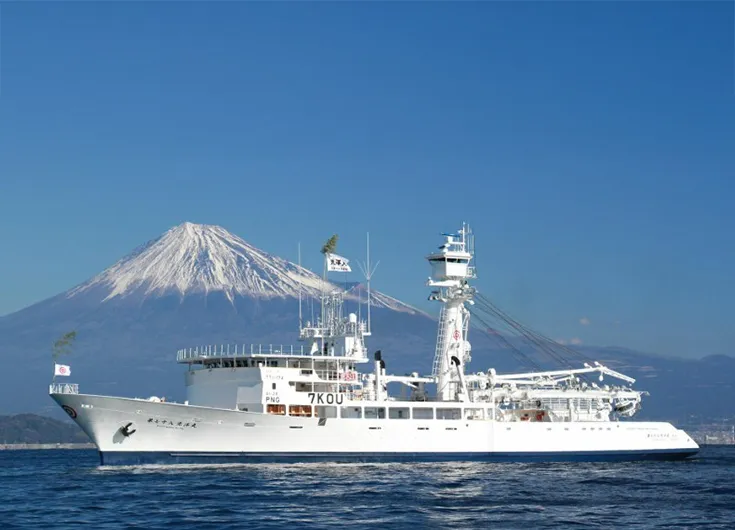
On February 15, 2024, Kyowa Fishery Co., Ltd., a Nissui Group company, in collaboration with another partner company, became the first Japanese-flagged purse seine fishing operation to achieve MSC (Marine Stewardship Council) certification for their skipjack tuna and yellowfin tuna fishery in the central western Pacific. The company considers it its mission to promote sustainable and environmentally responsible fisheries based on resource management, and therefore pursued this certification. It took approximately three years to obtain certification, from the start of preparations in 2020. During the pre-assessment, the company received support from WWF Japan and Seafood Legacy Co., Ltd.
The “MSC Japan Award" was newly established in 2024 to recognize businesses that have contributed to the promotion of MSC-labeled marine products in Japan. Award recipients were determined based on the previous year’s sales volume of MSC-labeled products for consumers, and Nissui was honored with the award in the manufacturer category for two consecutive years, 2024 and 2025.
ASC certification is an international certification scheme for the responsible production of aquaculture seafood operated by the Aquaculture Stewardship Council (ASC). Through “ASC Feed Standard,” which applies to feed mills, “ASC Farm Standard,” which applies to aquaculture farms, and “ASC Chain of Custody (CoC) Standard,” which ensures that certified products are kept separate and managed at each stage of distribution and processing, independent third-party organizations assess operations from perspectives including environmental conservation, consideration for local communities and labor, and aquaculture management systems, thereby ensuring traceability from farm to product.
In the Nissui Group, we have obtained ASC certification for multiple aquaculture farms and fish species, including salmon and Japanese amberjack, and are promoting responsible aquaculture.
![[Logo] ASC](/assets/img/site/170/170_40-img-03.svg)
ASC-C-01759
Kurose Suisan Co., Ltd., a Nissui Group company, became the first in the world to acquire ASC certification for its Japanese amberjack on December 16, 2017, and acquired Chain of Custody (CoC) certification (Note) for its processing plant on November 30, 2017. Kurose Suisan is one of the largest operators of Japanese amberjack aquaculture in Japan, and its "Kurose Buri" brand is distinctive for its firm flesh. Kurose Suisan provides a stable supply of fatty, high-quality Japanese amberjack throughout the year, thanks to Nissui Group's aquaculture technology.
Salmones Antártica S.A. (“SA”) (Chile), a Nissui Group company, acquired ASC certification for its salmon/trout on March 5, 2019, and received Chain of Custody (CoC) certification (Note) for its processing plant on its head office's premises on March 4, 2019. Salmon/trout and coho salmon handled by SA, which are distributed to markets worldwide through Nissui Group's sales networks, have become familiar among consumers as the "FIVE STAR" brand.
As of the end of March 2025, SA has obtained ASC certification for 100% of its production volume.
(Note) Chain of Custody (CoC) certification: This is a certification managed and operated by the Marine Stewardship Council (MSC) with respect to the management of processing and distribution processes (i.e., Chain of Custody). It certifies that its certified seafood has been managed appropriately, has not been contaminated with non-certified ingredients and is free from mislabeling throughout all processes of production, processing and distribution of the products.
Best Aquaculture Practices (BAP) certification is an international third-party certification scheme operated by the Global Seafood Alliance (GSA), covering the sustainable and responsible production of farmed seafood. Through certifications applicable to hatcheries, feed mills, farms and processing plants, third-party bodies audit the supply chain based on standards covering four pillars—environmental responsibility, animal health & welfare, food safety and social accountability—as well as traceability standards that support these pillars, thereby demonstrating responsible aquaculture from production through to products.
Salmones Antártica S.A. (“S.A.”) (Chile), a Nissui Group company, acquired BAP certification for its feed mill (Los Ángeles, Bio Bio Region) in August 2018, processing plant (Isla de Chiloé, Los Lagos Region) in January 2019, seawater aquaculture farm (Bahia Acantilada Sector 1, Aisen Region) in March 2019, and fresh-water aquaculture farm (Los Tambores fresh-water aquaculture farm in La Union, Los Rios Region) in August 2019. Having been certified for all four processes (i.e., hatchery (fresh-water aquaculture farm), seawater aquaculture farm, feed mill, and processing plant), S.A. acquired "4-star," the highest level of BAP certification.
MEL certification is a marine eco-label certification scheme originating in Japan, operated by the Marine Ecolabel Japan Council. It consists of the “MEL Fisheries Certification” and “MEL Aquaculture Certification,” which apply to operators that consider the sustainability of marine resources and the environment, as well as the “MEL Chain of Custody (CoC) Certification,” which ensures that certified products are segregated and managed at each stage of distribution and processing. Under these certifications, third-party bodies conduct audits from the perspectives of resource management and environmental conservation initiatives, thereby ensuring end-to-end credibility and traceability from capture and aquaculture through to products.
![[Logo] MEL](/assets/img/site/170/170_230_img-01.svg)
JFRCA
20C3600081
To enhance the sustainability of marine resources, the Nissui Group is making efforts to acquire and spread marine eco-labels.
| 2023 | 2024 | 2025 | ||||
|---|---|---|---|---|---|---|
| Name of certification | Number of products | Total sales volume (tons/year) |
Number of products | Total sales volume (tons/year) |
Number of products | Total sales volume (tons/year) |
| MSC (Note 1) | 44 | 6,581.3 | 50 | 6,026.6 | 53 | 7,259.6 |
| ASC (Note 2) | 7 | 55.6 | 7 | 43.7 | 11 | 172.7 |
| MEL (Note 2) | 13 | 6,114.6 | 13 | 5,380.6 | 13 | 4,266.3 |
(Note 1): Scope: Products for which applications were made by Nissui Corporation.
(Note 2): Scope: Products for which applications were made by Nissui Corporation and its Japanese Group companies.