In FY2020, Nissui established the Container/Packaging Selection Guidelines, in consideration of the impact of plastics on the global environment, such as the marine plastics problem and global warming. One of the objectives is to reduce the volume of plastics used in containers and packaging to the extent possible, while taking advantage of their roles and functions, including protecting products and maintaining their quality. The Guidelines are applicable to all Nissui-branded products (i.e., frozen prepared foods, surimi-based products, shelf-stable foods, marine products and fine chemical products).
| Description of initiatives | Specific examples | |
|---|---|---|
| Reduce | Suppress the volume of plastics used in containers and packaging (minimization) |
|
| Replace | Adopt plant-derived and recycled materials and replace existing materials with them |
|
| Recycle | Adopt and switch to easy-to-recycle materials |
|
|
Other forms of environmental friendliness (other than plastics) |
Pursue environmental friendliness also for materials other than plastics, such as adopting plant-derived ink and paper certified by the Forest Stewardship Council (FSC). |
|
Nissui has prepared a "Container/Packaging Checklist" in accordance with the Guidelines and implements it as part of the product development flow. It serves as a mechanism that enables us to check whether or not appropriate environmental friendliness has been examined in terms of the materials, size, thickness, etc. of containers and packaging.
At Nissui, the Plastics Subcommittee and the Container/Packaging Eco-Project play a central role in reviewing the use of plastics in all of its products.
| FY2021 | FY2022 | FY2023 | FY2024 | FY2025 | |
|---|---|---|---|---|---|
| Food Products Business (kg) | 33,814 | 72,830 | 62,610 | 59,002 | 130,972 |
| Marine Products Business (kg) | - | 23,835 | 45,532 | 31,950 | 14,983 |
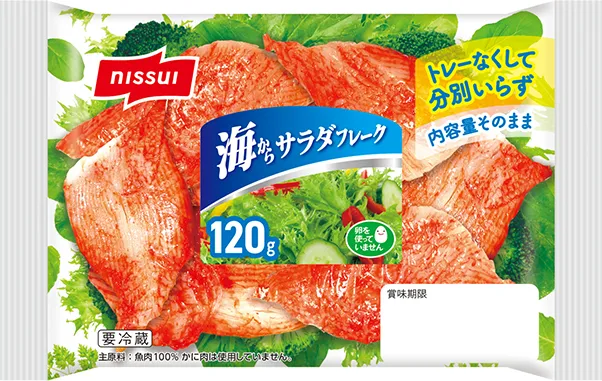
By switching the plastic trays and films used for fish paste products such as “Umikara salade flake” and “Chigiri-ten” to packaging formats that do not use plastic trays and films, we achieved an annual reduction of approximately 88 metric tons.
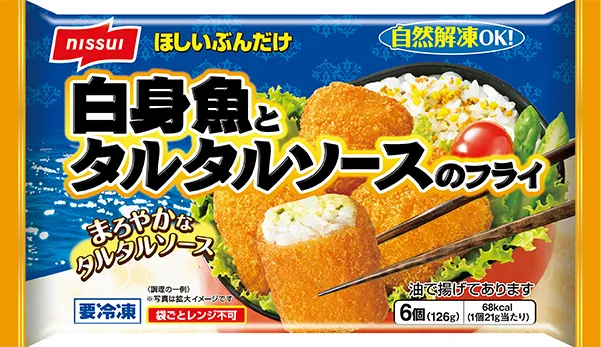
Plastic trays used in products and films used for product outer packaging have been thinned, resulting in an annual reduction of approximately 9 metric tons.
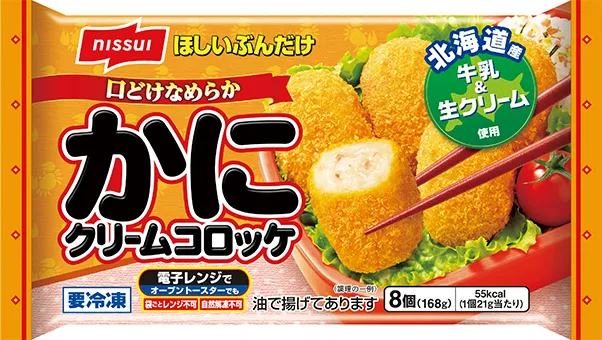
Plastic trays used for products such as Corn Cream Croquettes and Crab Cream Croquettes have been thinned, resulting in an annual reduction of approximately 7 metric tons.
By adopting paper-based trays from the product development stage, we are reducing plastic usage.
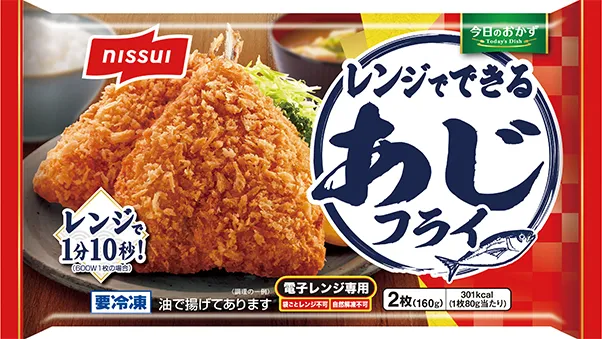
By using 10% plant-based plastic in the plastic trays used in products, we are reducing the use of petroleum-based plastic.
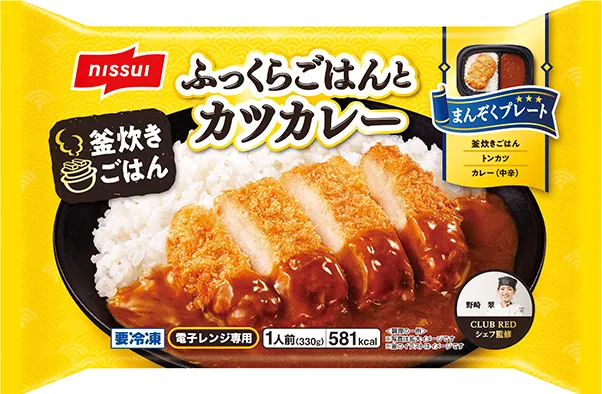
Plastic containers and packaging for food products are, in most cases, made by laminating multiple materials together. Moreover, differences in size, thickness, and the degree of contamination after use all contribute to the challenges of recycling food packaging. Accordingly, we are promoting initiatives to design packaging with recyclability in mind from the outset and, when recycling is possible, to clearly communicate this to consumers, thereby encouraging proper collection and resource recovery after use.
| Company name | Results of Initiatives and Plans/Targets |
|---|---|
| Aquaculture Companies in Japan | Aquaculture companies in Japan reviewed the use of expanded polystyrene boxes, which are commonly used for transporting seafood, to assess the possibility of switching to alternative materials. Focusing on periods other than the high-temperature summer months, they promoted the use of water-resistant cardboard boxes as an alternative. In FY2021, a total of 6,907 cases were transported using cardboard boxes. |
| Thai Delmar Co., Ltd. (Thailand) | In May 2023, Thai Delmar Co., Ltd. changed the packaging format of its main products to single-unit packaging in collaboration with customers, contributing to a reduction in polypropylene (PP) band usage. The annual reduction is expected to be approximately 6,200 kg. The company also collaborated with suppliers to increase the weight of each raw material bag from 20 kg to 25 kg. As a result, the use of plastic for inner bags is expected to be reduced by approximately 600 kg per year. |
| Gorton's, Inc. (USA) |
Since 2019, Gorton's, Inc. has started reviewing existing materials and testing recyclable new materials in collaboration with suppliers in relation to two major container and packaging formats in its products (i.e., SURPs (stand-up resealable pouches) and direct-filling containers/packaging). In 2020, Gorton's determined the following targets for containers and packaging of products for retail.[Targets]
In 2021, the results of initiatives related to containers and packaging of products for retail were as follows.
|
| Flatfish Ltd. (UK) |
In 2020, Flatfish Ltd. promoted the introduction of plastic containers that can be recycled by consumers in the majority of its products. In 2021, Flatfish will further promote this initiative in accordance with the plan below. [Plans]
In 2021, Flatfish identified the water absorbent pad that accompanies trays as an obstacle to recycling containers and packaging (it is unsuitable for recycling as it is made of different plastic material from the tray). Flatfish developed new trays that no longer require any water absorbent pad and switched to a recyclable design, which translated into a reduction of plastics by 2.9 tons. |
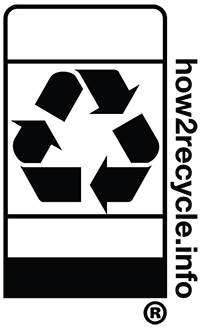
(Note) How2Recycle label: A label in USA/Canada indicating whether or not the container/packaging is recyclable. At Gorton's, all laminated pillow bags with zipper already bear this label as of December 2020.
Plastic waste is also generated at both production plants and logistics centers. The Nissui Group has set a target as an environmental indicator for the reduction of plastic emissions in the production and distribution stages in Japan, and is promoting efforts for the achievement of this target. We analyze plastic emissions at the departmental level and are actively working with raw material suppliers to reduce plastic waste.
We have identified the different types of plastic waste and their corresponding weight percentages in the plastic emissions from Nissui's food production plants in Japan. Based on our findings, we determined that packaging derived from raw materials accounts for a large portion of the weight of plastic emissions, which has led us to include them as one of our reduction targets. At all Nissui Group production plants located in Japan, we are considering switching to reusable materials and forms for containers and packaging (bags) used for raw materials. We are also encouraging reuse by replacing these containers and packaging with returnable solutions (for raw materials such as onions, milk and rice).
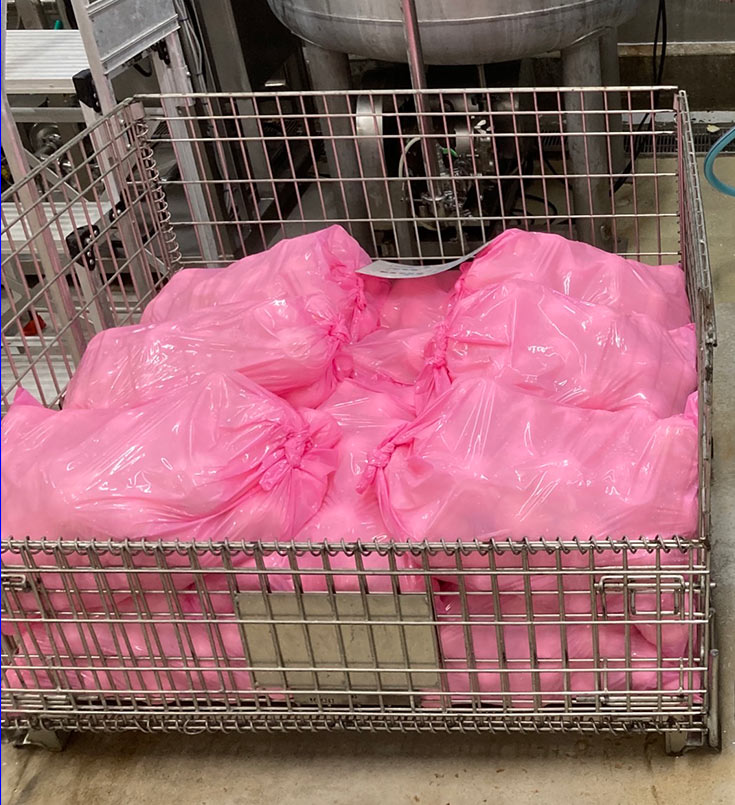
Before the Switch: Onions as Raw Material (Plastic Bags)

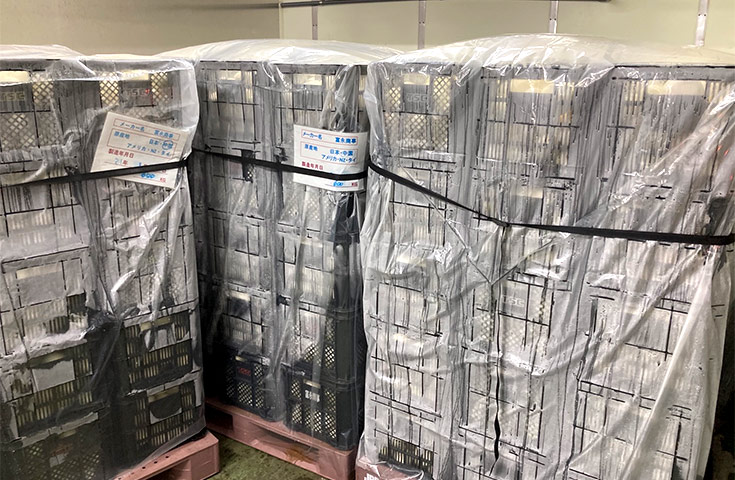
After the Switch: Onions as Raw Material (Returnable Containers)
Targets for reduction of plastic waste were also examined at logistics centers. In the distribution of marine products, we are promoting the replacement of Styrofoam packaging used in the transportation of fresh tuna with reusable crates. In FY2025, we transported 4,336 reusable crates for fresh tuna, saving approximately 13 tons of Styrofoam packaging.
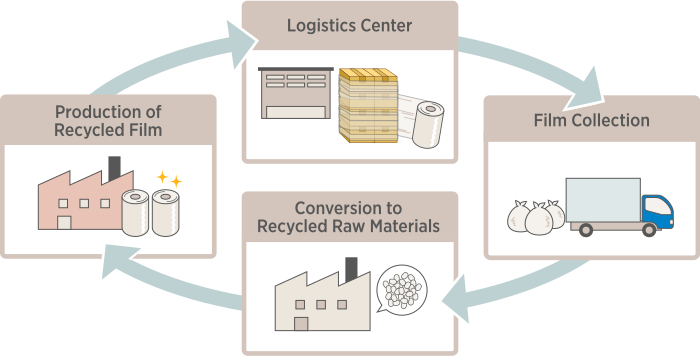
In addition, with regard to stretch film, which is widely used in logistics to prevent cargo from collapsing, we are actively collaborating with plastic recycling companies to establish a closed-loop recycling (Note) system within the Group throughout Japan. In FY2025, Nissui Logistics Corporation, a Group company, has started using recycled stretch film utilizing this system at all of its business locations. Going forward, we aim to expand the use of recycled stretch film by extending the closed-loop approach to other Group companies in Japan.
Furthermore, regarding sheet pallets used for cargo transportation, we collect sheet pallets that can no longer be used due to damage or other factors and recycle them as raw materials to reduce plastic waste emissions.
(Note) Closed-loop recycling: The process of recycling and reuse of materials that have traditionally been disposed of as waste, transforming them into valuable resources.
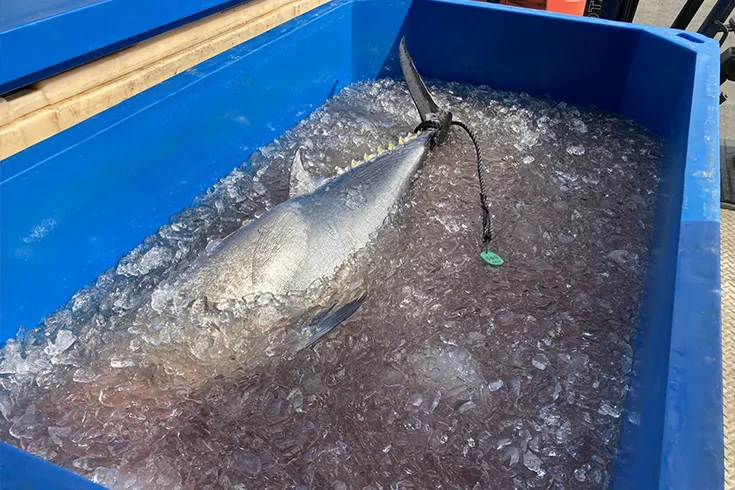
A Reusable Crate for Fresh Fish